




Celebration of Japan’s Folk Music Traditions
By TOMOKO NAGAI
Rafu Staff Writer
The Japanese folk music organization Matsutoyo Kai held its annual student recital on May 17 at the Ken Nakaoka Community Center in Gardena, presenting a colorful program of minyo, traditional folk songs and dances from across Japan.
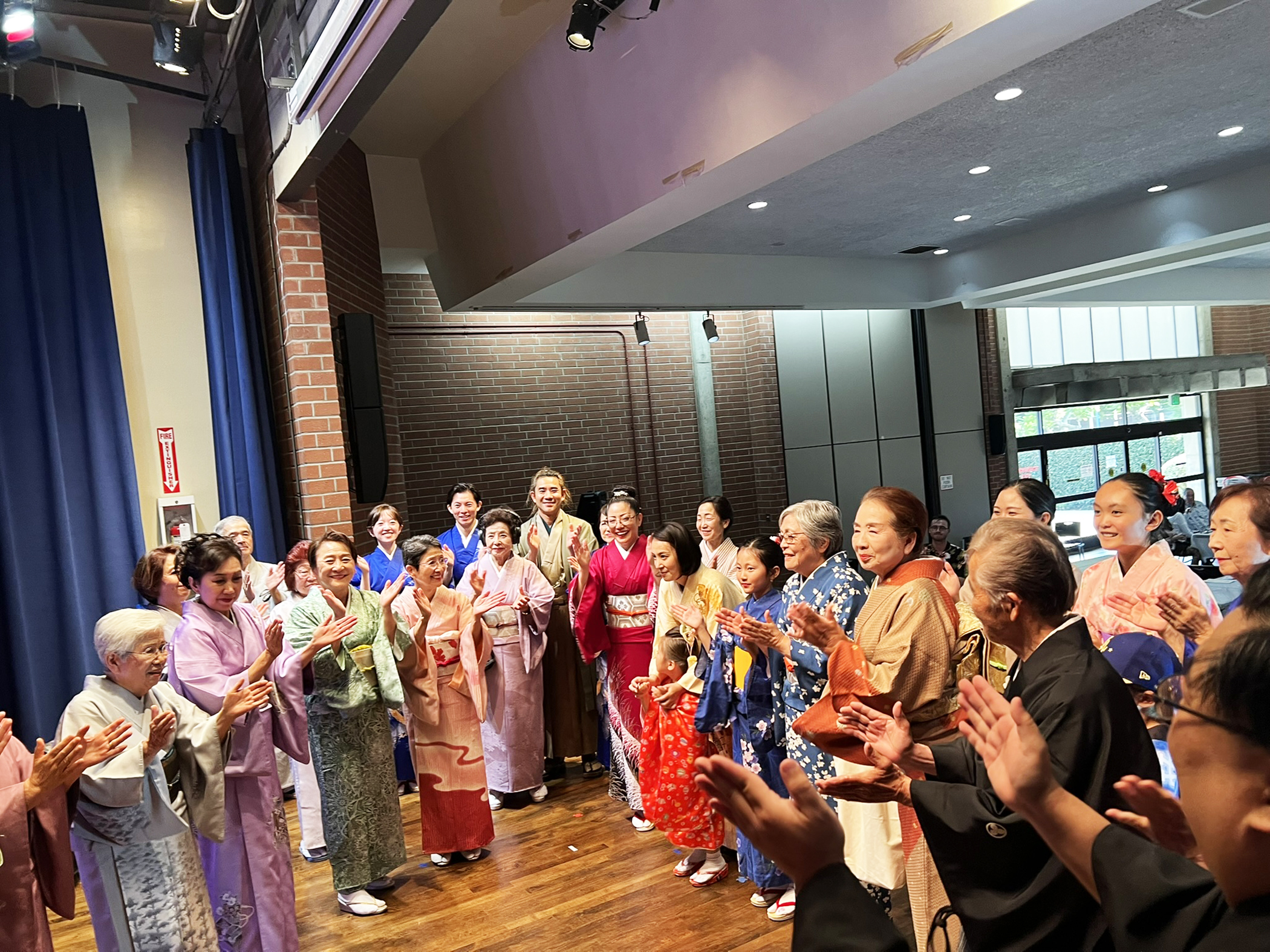
The recital featured 52 performances by students ranging from first-time performers to advanced instructors, each demonstrating the results of their training before an audience of family members and friends who responded with warm applause throughout the day.
Founded in 1966 by Grand Master Sato Matsutoyo, Matsutoyo Kai has dedicated itself to preserving and passing on the rich traditions of Japanese folk music while nurturing new generations of performers. Opening the event, the emcee praised the members for their dedication and heartfelt commitment to their studies and invited the audience to enjoy the enduring beauty of Japanese folk music.
The program opened with a festive medley of four celebratory pieces — “Shoju Sanbasou,” “Hakata Dontaku,” “Kumamoto Jitensha Bushi,” and “Oki Iwai Ondo.” Students then performed a wide variety of folk songs representing different regions of Japan.
The performances reflected the varying skill levels of the participants, ranging from shamisen and vocal performances to hikiutai, in which a single performer both sings and plays the shamisen. Teachers, senior students, and fellow members supported one another on stage with shamisen, percussion, vocals, and dance.
The dance division added further brilliance with synchronized group performances in matching costumes. Guest dancers Bando Hidesomi and Bando Hiromiya, together with Hidesomi’s students Manami Kawakami, Kazumi Kawakami, and Miako McGibbon, also enriched the program with their elegant performances.
As the recital progressed from general members to licensed performers (natori) and certified instructors (shihan), the musical performances gained increasing depth and refinement. Near the conclusion, Marisa Kosugi performed “Oarai Jinku,” followed by Grand Master Sato Matsutoyo’s appearance at center stage.
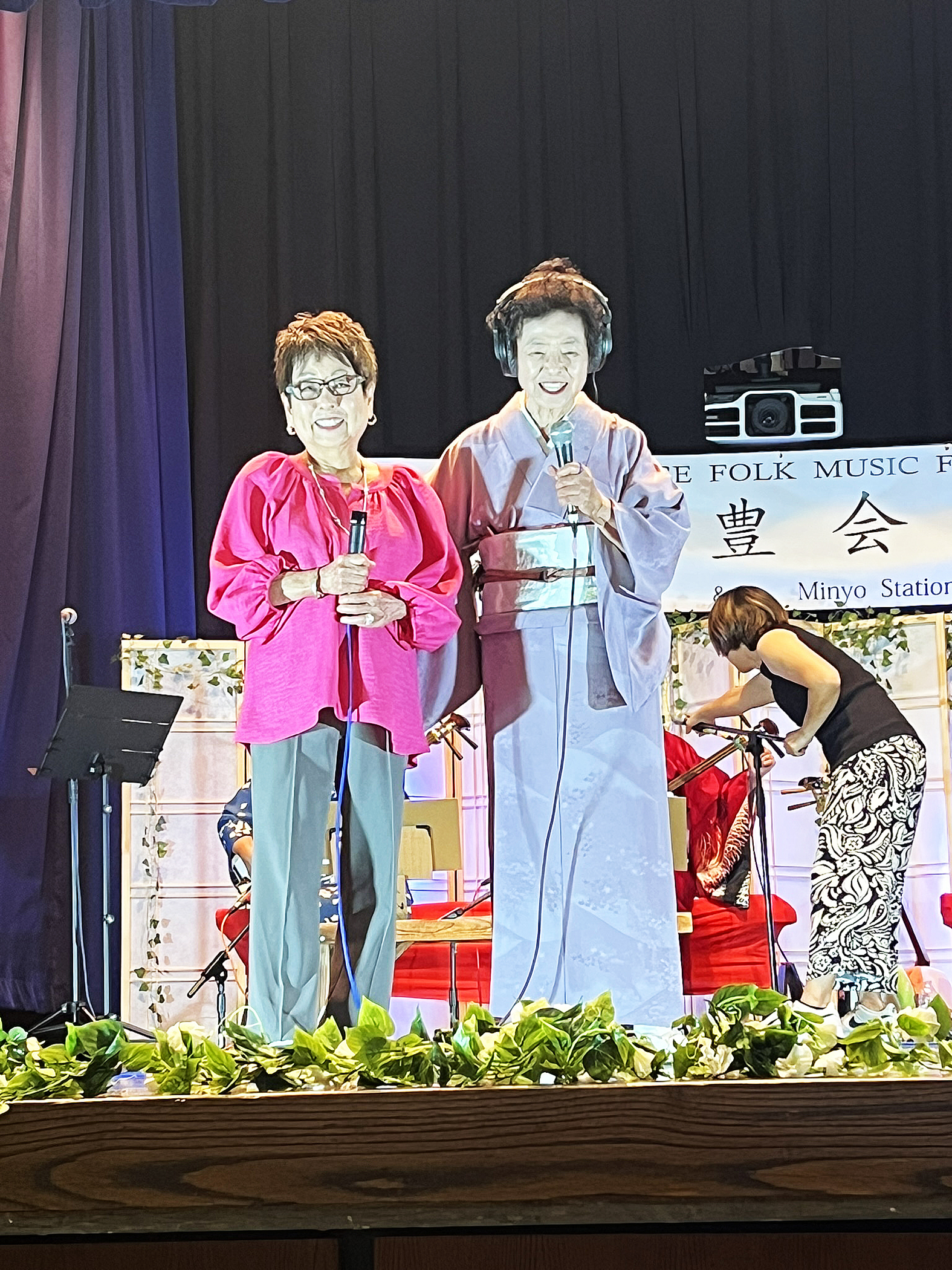
One of the recital’s most anticipated traditions is the “Minyo Treasure Box” (Minyo Tamate Bako), an unscripted segment in which Matsutoyo accepts requests from the audience and performs songs chosen on the spot. While chatting warmly with attendees and sharing updates on her recent activities, she sang “Otemoyan” and “Ohara Bushi.”
In a touching moment, she spotted former longtime student Kimiko Tsurudome in the audience and invited her onto the stage. Though visibly surprised, she happily joined her teacher in song, drawing enthusiastic applause from the audience.
The heartfelt exchange reflected not only the enduring bond between teacher and student, but also how the seeds of Japanese folk music that Matsutoyo has planted over the decades have taken firm root within Southern California’s Japanese American community.
The finale featured “Yosakoi Naruko Odori” and “Joban Tanko Bushi.” Audience members joined in a large circle dance, bringing the recital to a lively and joyful close.
Following the performance, Matsutoyo smiled as she reflected on the day’s success.
“Everyone truly worked very hard,” she said. “In recent years, my students have taken the lead in organizing the recital. This time I hardly had to do anything. I entrusted most of the work to my daughter, Marisa Kosugi, and my students, and together they created this event. There may have been a few mistakes, but it became a truly heartwarming gathering where everyone supported one another.”
She also celebrated the growth of the next generation, noting that five students had recently earned natori status.
“We now have many capable people continuing to grow. I’m finally beginning to feel that I can confidently entrust the future to them,” she said.
Looking ahead, Matsutoyo added, “We’re planning a major performance next February, and I hope to stay healthy so I can be on stage.”
For 61 years since its founding, Matsutoyo Kai has remained committed to preserving and promoting Japan’s folk music traditions in Southern California. As leadership gradually passes to a new generation, the organization continues to build steadily upon its rich legacy.