


JA History, Community Passed to Next Generation
By TOMOKO NAGAI
Rafu Staff Writer
The annual Summer Festival at the Long Beach Japanese Cultural Center drew a lively crowd of families and community members on June 27, bringing together generations ranging from young children to seniors at a center that has served the area’s Japanese American community for decades.
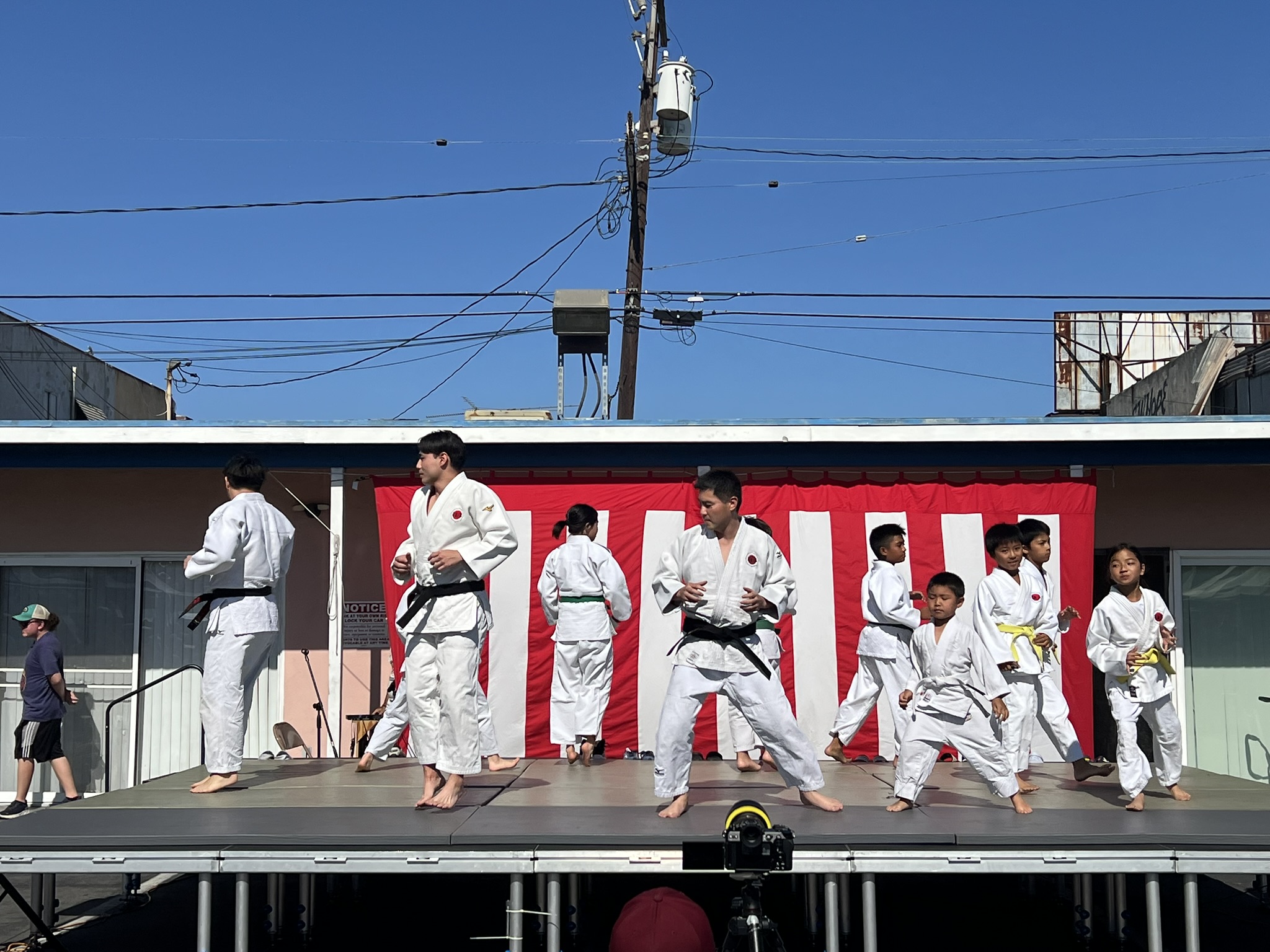
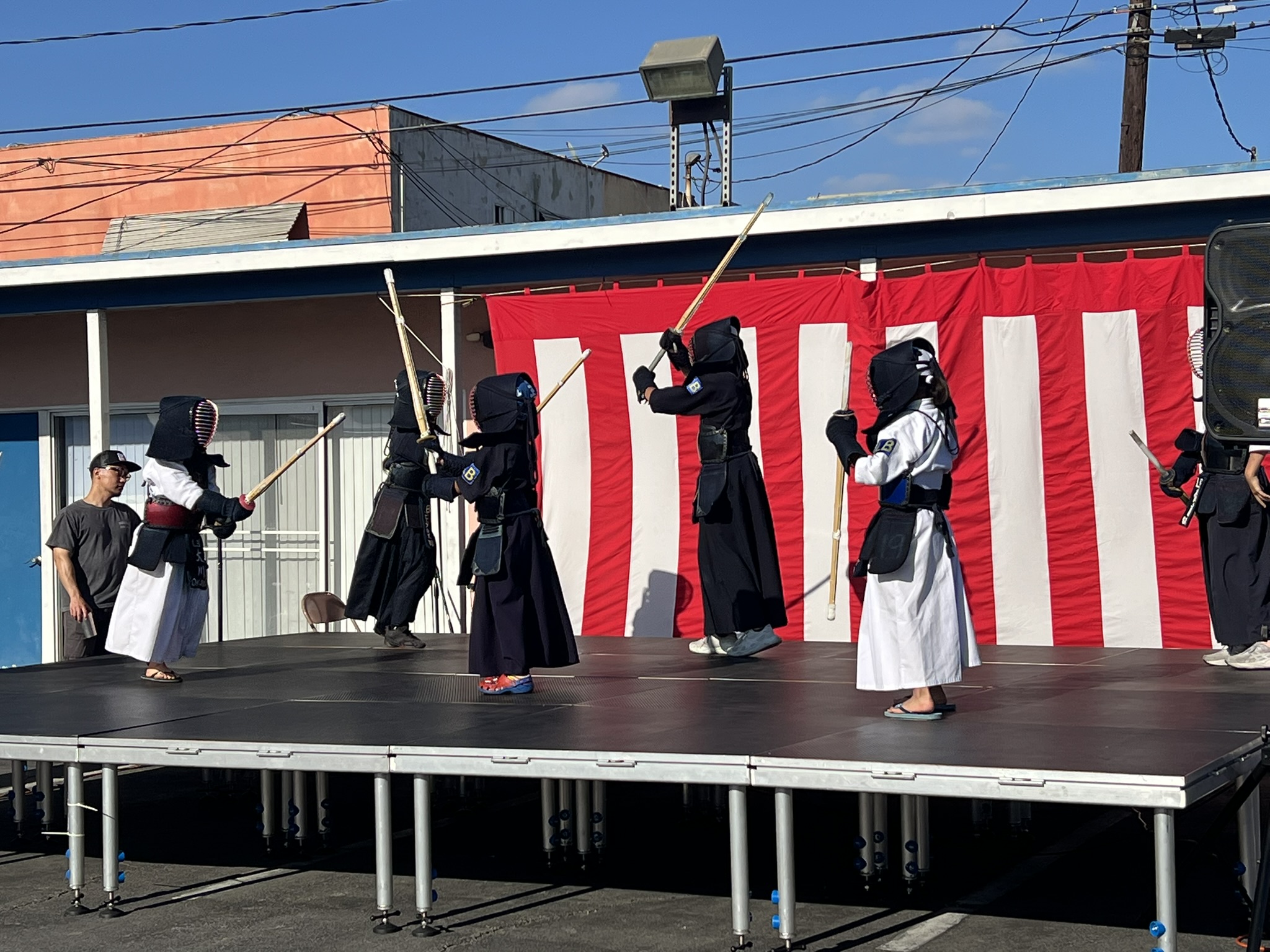
Martial arts demonstrations were among the highlights of the festival, with members of the center’s dojo showing the results of their regular training. The judo program emphasizes participation by the entire family, with parents, children and siblings practicing together on Tuesday and Friday evenings. Several families took part in the demonstration, performing basic techniques including break falls and rolling falls.
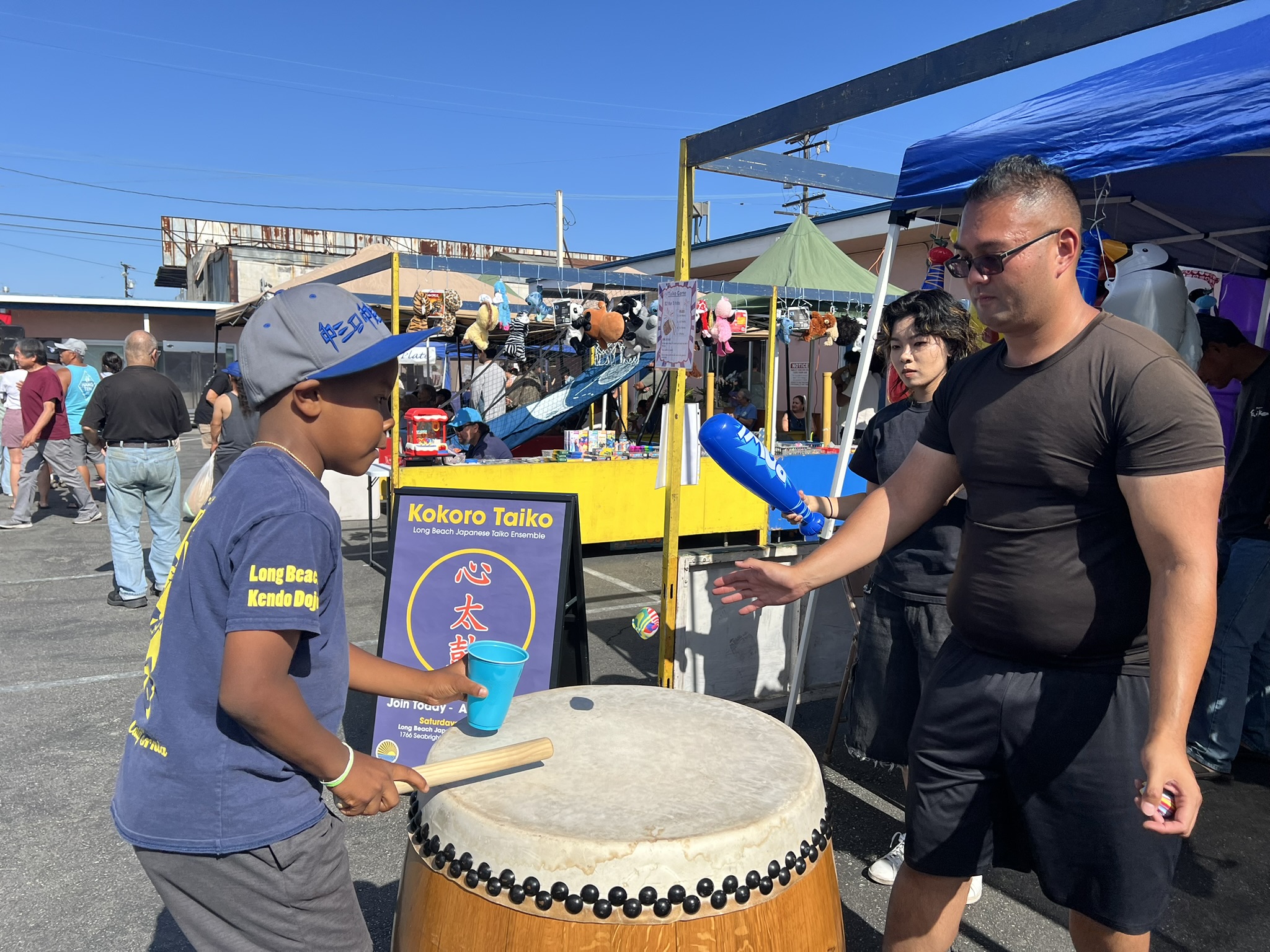
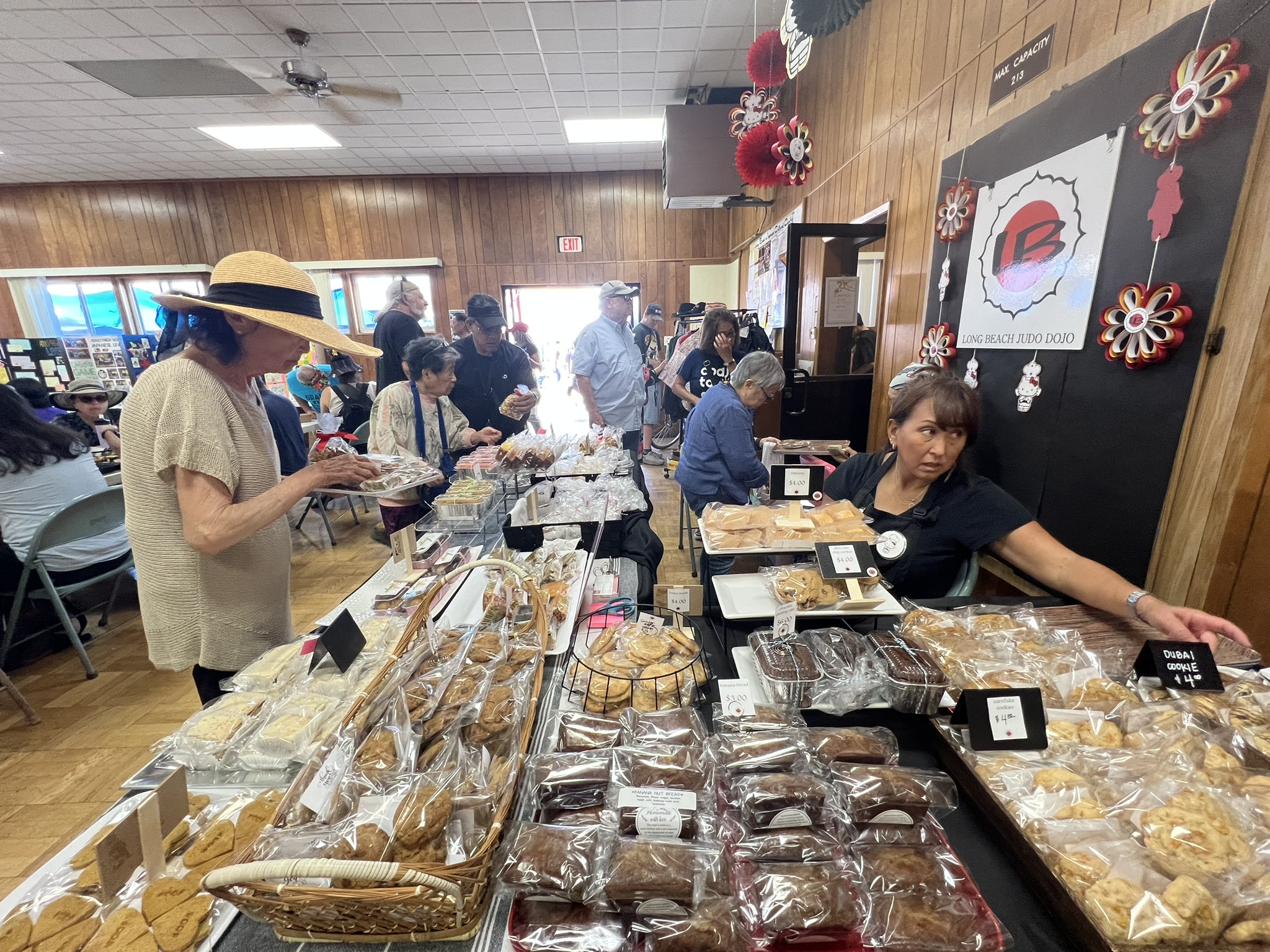
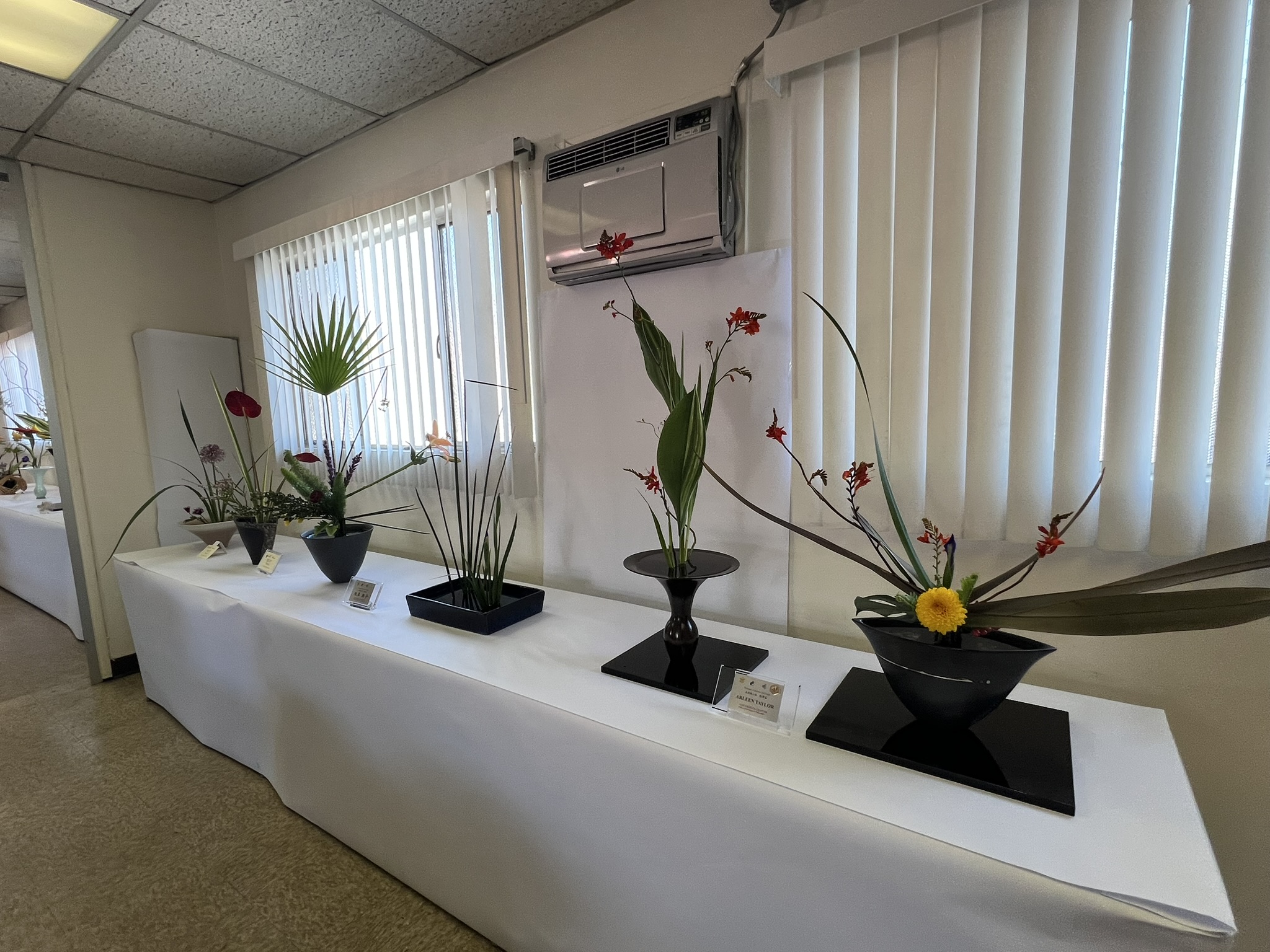
The festival also featured food booths and displays by students in cultural programs such as ikebana,calligraphy and taiko, as well as artwork by children from the Japanese language school. A bake sale and rummage added to the festivities.
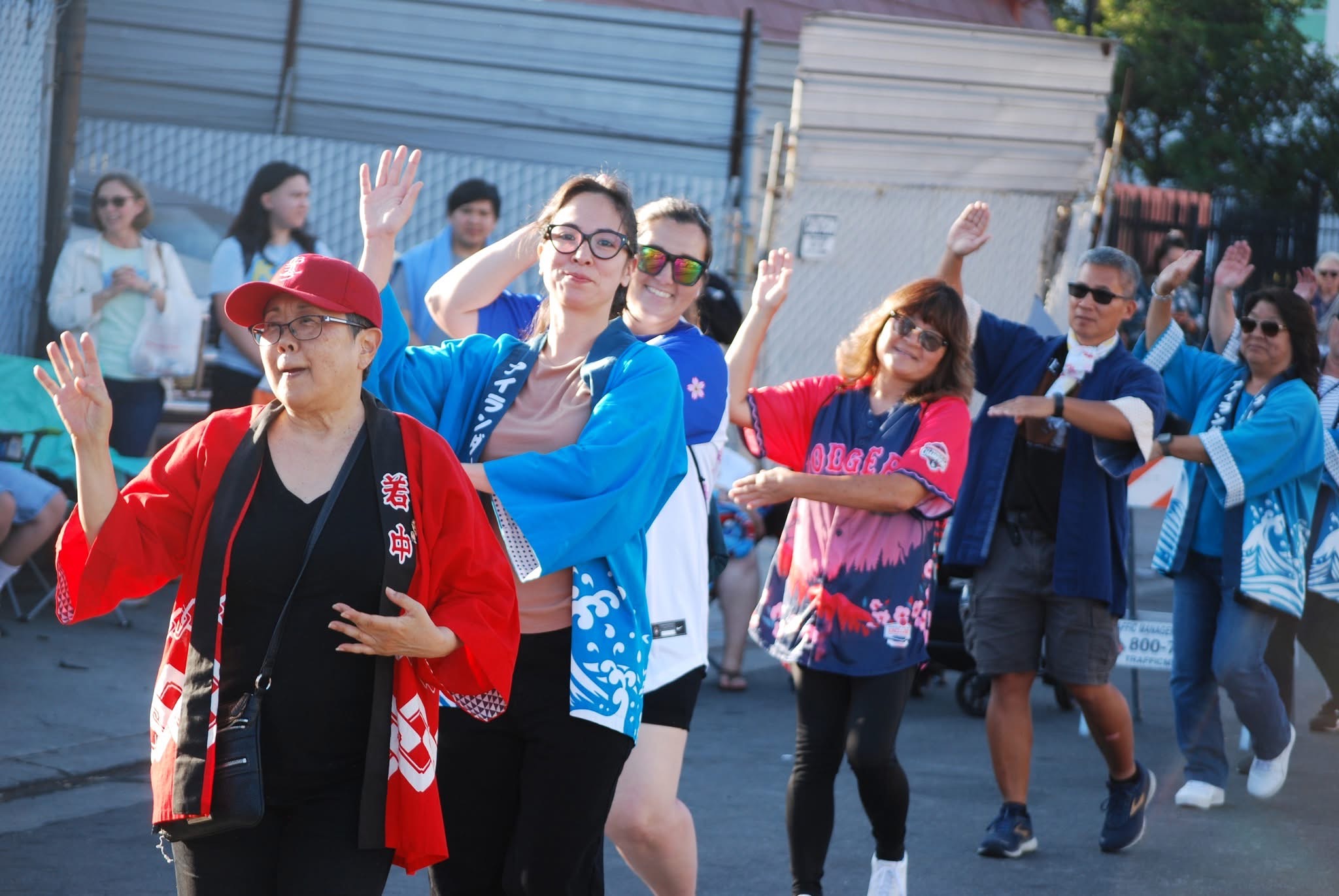
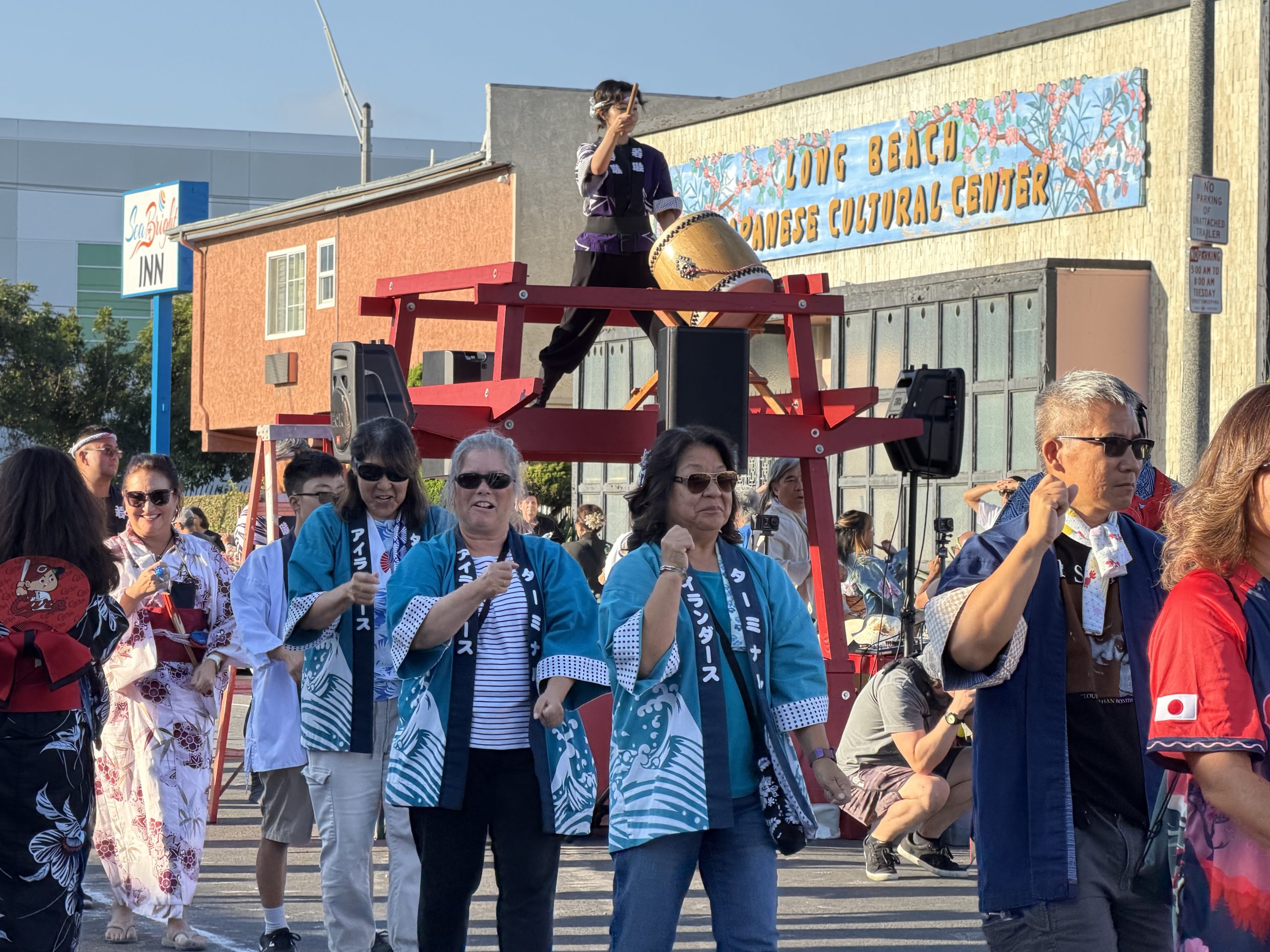
In the evening, participants gathered on the street in front of the center for a lively session of ondo, or Bon dancing.
Among those attending were families whose ties to the center stretch back for generations.
Long Beach native Vivian Hirata said she has been coming to the center for “about 70 or 75 years.” Her family later moved to Orange County, where her son became involved in taiko at the Orange County Buddhist Church and her daughter participated in Girl Scouts. Yet the Hiratas have continued to maintain their membership in Long Beach and return to the center.
She said she does so “to support the community.”
For the festival, Hirata was joined by her husband, Dan, son Brett, and grandchildren, 6-year-old Keston and 3-year-old Hayden.
Behind such enduring connections across generations and geographic boundaries lies the history of a community center that Japanese Americans built together in the difficult years following World War II.
According to Victor Fukuhara, who has spent years collecting and preserving historical materials related to the center and the local Japanese American community, the center moved to its present location around 1953.
Known at the time as the Harbor Japanese Community Center, the building was originally a warehouse and was renovated so it could accommodate activities including a Japanese language school.
Today, the center’s archives contain photographs and documents preserved by local Japanese American families, along with materials related to the wartime incarceration.
“I started collecting the materials,” Fukuhara said.
Fukuhara’s own life reflects much of the history he is working to preserve.
Born in Long Beach, he was only a year old in 1942 when he and his parents were sent to the Minidoka incarceration camp in Idaho. He learned later that four families were crowded into a simple one-room structure, using blankets as partitions to provide a small measure of privacy.
“When I think about what my parents went through, I still can’t believe it,” he said.
The hardships did not end when the war was over.
After the family returned, finding a place to live was difficult. Fukuhara recalled being told, “Get out. We don’t want you here.”
“I don’t know how long it was, but the four of us lived in a car for a while,” he said.
Eventually, his father met a sympathetic Black woman who worked in real estate. She offered the family a place to stay.
“If you want, you can live in my garage,” she told them.
That same afternoon, Fukuhara recalled, she ran an electrical cord from her house to the garage so that the family would have electricity.
His father became a gardener and later operated a nursery, but obtaining financing from banks was another obstacle for Japanese Americans at the time.
Fukuhara remembers accompanying his father to a bank, where his father was told, “Get out. We’re not going to lend you money.”
As they left the bank together, his father bent down, looked at his young son and told him, “Someday they’re going to come to us and ask us to borrow money.”
Faced with such barriers, Japanese Americans pooled their resources and helped one another with small amounts of money. A credit union was established at the community center, and Fukuhara’s father served on its board for 30 years.
“For 30 years, there wasn’t a single bad loan,” Fukuhara said.
Today, one of Fukuhara’s priorities is making sure younger generations understand the history behind the community they have inherited.
“I want to educate the young people,” he said. “They don’t know what the camps were like.”
LBJCC continues to offer a Japanese language school as well as kendo, judo, karate, taiko and other cultural and community activities. It also maintains ties with a nearby Buddhist temple and Christian church.
“That’s what keeps us going,” Fukuhara said. “The building wasn’t just here. We had to build it.”
At this year’s festival, families who have returned to the center for decades mingled with grandchildren and young martial arts students growing up within the community today. In that sense, the festival offered more than an afternoon of performances, food and dancing. It provided a place to remember the history and culture built by generations of Japanese Americans — and to pass those connections on to the next generation.
Long Beach Japanese Cultural Center
1766 Seabright Ave.
Long Beach, CA 90813
www.lbjcc.org